How can I improve my smile? Part 2
PUBLISHED IN TCI WEEKLY NEWS
13th December 2014
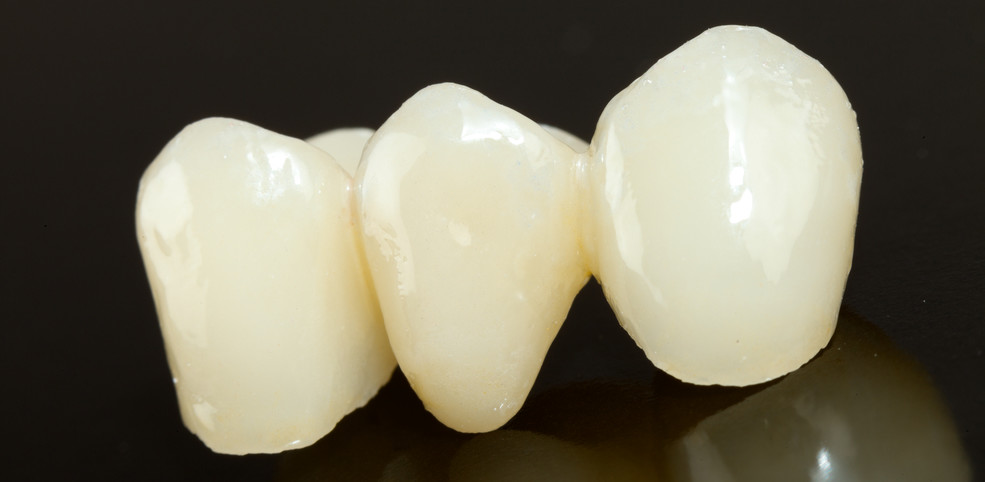
In this, the second column looking at how your smile can be improved, I look at the use of veneers, crowns, bridges, dental implants and orthodontics.
If teeth are more heavily restored (have a lot of fillings), are discoloured or out of place then one possible solution is the option of veneers and/or crowns. A veneer is a thin porcelain cover designed to go on the outside surface of a tooth. Veneers are only used on front teeth and are generally used for cosmetic purposes, for example to restore chipped or broken teeth, or to change the colour, size or shape of teeth. The teeth generally require a small amount of preparation.
 A healthy, white smile is an asset for anybody, professionally and personally but you may have noticed as you get older that your teeth have changed; they may have lost some of their whiteness and started to take on a more yellow/ brown or grey colour. This is normal and comes with aging, as the tooth enamel becomes worn and less translucent due to tiny micro-cracks and the dentine inside the tooth becomes thicker and darker. You may also be more aware if irregularities and an uneven smile as the teeth may be displaying signs of wear, the teeth may have moved (drifted) or there are restorations placed in the teeth. So, how can you get that perfect smile?
 PUBLISHED IN TCI WEEKLY NEWS
 I was interested to read that a new survey conducted in the UK, found that tooth decay affects over 10% of three-year-olds, a number which rises to 25% by the age of five. Public Health England researchers checked the teeth of nearly 54,000 children at nurseries, children’s centres and playgroups and found 12% of children had evidence of tooth decay. These youngsters had an average of three teeth that were decayed, missing or filled. Although we don’t have the studies done here, this is definitely something that I see here in Turks and Caicos, particularly amongst certain segments of our community and there are definitely some things we can learn from the UK.
 A study has recently been published in the